
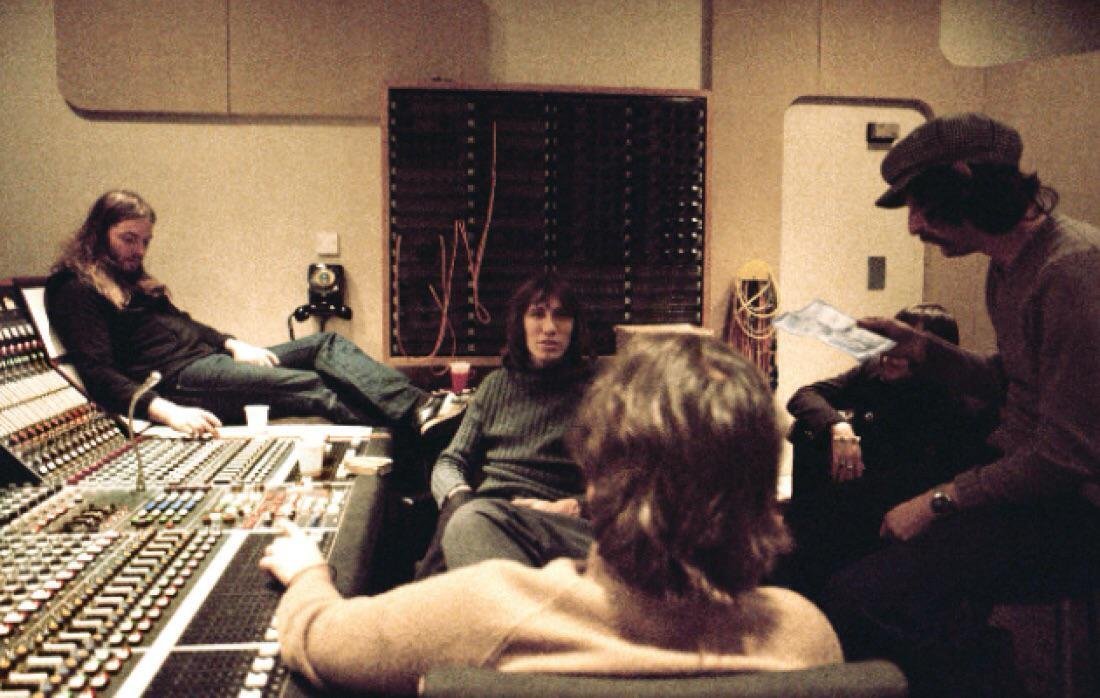
When rock fans debate the best concept album, the best rock opera, or the best live tour, Pink Floyd’s The Wall always rises to the top. One of Pink Floyd’s greatest albums, The Wall tells the story of a traumatized rockstar falling apart at the seams and attempting to protect his fragile psyche with a metaphorical wall. It’s a horrifying tale full of disturbing characters, told through memorable rock songs and carefully chosen sound effects. Behind the scenes, the great success of the album came despite members of the band being fired and the feud that arose between Roger Waters and David Gilmour.
Even after the album made it onto store shelves, a massive stage show and a big-studio movie based on The Wall proved challenging – and sometimes even treacherous – to the band. These stories about recording The Wall and bringing it to life in an audiovisual spectacular depict the kind of ambitious rock band that doesn’t appear to exist anymore.
The Idea Of A Wall Came From A Rowdy Montreal Concert
During a 1977 Pink Floyd concert in Montreal, Canada, a loud and rowdy group of audience members managed to take front-row seats. Over the course of the show, this group became so obnoxious and intrusive to bassist Roger Waters that he shouted and then spit at one of them.
Waters immediately felt disgusted, wondering what happened to divide him so much from his audience. This division was the starting point for the concept of The Wall.
The Album’s Story Is Heavily Based On Roger Waters’s Life
Roger Waters conceptualized the album based on his personal experiences. The songs cover heavy topics, including the loss of a father during WWII and the son who never met him, as well as an overprotective mother and difficult divorce.
These were all experiences Waters endured, which remain vital parts of the story. Waters told The New York Times:
“When it was first done, I was bemoaning the fact I was a child of [WWII] and I had lost my father, and that has a severe fracturing nature on the family, and it made me very angry about a lot of things.”
Producer Bob Ezrin Assembled The Album Like A Movie
Pink Floyd recruited respected producer Bob Ezrin to help them develop The Wall, along with engineer James Guthrie. Faced with the conceptualized but unorganized material that “was enough for three albums,” Guthrie suggested that the “most complete” songs be recorded first and the rest of the album could be built around them.
Ezrin told Tammy La Gorce of the Grammys that he began writing an outline for the album that came together quickly once he started thinking of it as a script. He presented the band with his “script,” including places where current songs and “to be written” songs would fit in later.
Keyboardist Richard Wright Was Fired, And Drummer Nick Mason Nearly Was, Too
Though the exact reasons and timing are debated, Pink Floyd’s longtime keyboardist Richard Wright was fired from the band during the recording of The Wall. He was hired as a contract player for the subsequent tours, but his feud with Roger Waters ended his full-time status in Pink Floyd.
Waters also says that guitarist David Gilmour suggested that the band fire drummer Nick Mason for his subpar drumming skills, a claim that Gilmour disputes. However, some complex drum parts on The Wall were played by another drummer, Jeff Porcaro of Toto.
‘Comfortably Numb’ Was David Gilmour’s Major Contribution To The Album
Though Roger Waters wrote the vast majority of songs on The Wall, David Gilmour contributed to three songs that made the final cut. Most famously, Gilmour’s song “Comfortably Numb” became one of the album’s high points, but it may not have made it onto the record if it weren’t for Bob Ezrin.
The producer saw himself as a “referee” who had to work to make sure that The Wall was a Pink Floyd record and not a Roger Waters record. Gilmour later said that it was only at Ezrin’s urging that his songs made it into The Wall.
Famed Animator Gerald Scarfe Provided Designs And Animation For The Album
In 1974, Pink Floyd approached popular British cartoonist and animator Gerald Scarfe to produce illustrations for them. Scarfe went to one of the band’s Dark Side of the Moon shows and agreed to collaborate on The Wall. Scarfe ended up designing the album packaging and producing key animations and props that would be used in the live concert version.
Most famously, his depiction of Pink’s mental judge brings to life “a dichotomous character who is both serious and farcical.”
The band explains about the Judge, “He is simultaneously imposing and comic, roaring his verdict like thunder while also literally talking out of his [behind].“
The Children Who Sang On ‘Another Brick In The Wall, Pt. 2’ Never Got Paid
Bob Ezrin and Roger Waters sought out a group of kids to sing on “Another Brick in the Wall, Pt. 2.” They found willing participants at Islington Green, where music teacher Alun Renshaw convinced them to sing “like [they’re singing] on the playground.”
Though each of the kids got a concert ticket and a copy of the song, they were otherwise uncredited and unpaid.
The Band Faced Inaccurate Accusations Of Including Far-Right Beliefs In Some Lyrics
In one of The Wall’s darkest moments, Pink hallucinates himself as the leader of a rally with offensive designs on people of other races, sexualities, and disabilities. The songs describing this scene are intended to be critical of such behavior, but some have mistaken the lyrics for Pink Floyd’s genuine beliefs.
A real-life Aryan group adopted the crossed-hammer symbols used in Gerald Scarfe’s satirical artwork, which only added to the confusion.
Roger Waters Became Pink Floyd’s De Facto Leader
With Richard Wright out of the band and the massive success of The Wall pulling in millions, Roger Waters’s leadership of Pink Floyd became fully cemented. “There wasn’t any room for anyone else to be writing [lyrics],” Waters later told Rolling Stone, “because they’ll never be as good as mine.”
David Gilmour told Louder Sound regarding the “major hostilities” between Waters and himself:
There were some major arguments, but they were on artistic disagreements… We had a highly productive working relationship that operated pretty well through The Wall.
The Music Blew Out The Speakers During A Preview For Record Executives
When the album was finally finished, Bob Ezrin took a full tape to CBS for record executives to preview. The tape was tested in a conference room rigged with a professional speaker setup, but at the end of the first song, one of the speakers blew out. In Ezrin’s words, “We set off around the building trying to find a big office with a half-decent sound system.”
Ezrin and the suits eventually found a small office with a half-decent set of bookshelf speakers. As the album began to play, CBS workers packed the room and the line overflowed down the hall. Ezrin was confident The Wall would be a hit.
The Massive Stage Show Cost More Than It Generated
Roger Waters and Gerald Scarfe developed incredibly expensive and ambitious plans for a tour of The Wall, which took place from 1980-1981. The entire album was played out, with animation displayed on massive screens and huge puppets of Pink’s tormenters. The show was so big that it wouldn’t fit in many venues, and the band considered traveling in a custom giant tent shaped like a slug creature.
There was ultimately no “slug tent,” but each show cost so much that the band had to absorb financial losses at the end of the tour. The only exception, ironically, was Richard Wright, who was working “for hire” at that point.
Stage Crew Built A Real Wall In Front Of The Band
Just as Pink built a metaphorical wall around his emotions, and Roger Waters felt a divide with his audience, a literal white-bricked wall was built onstage during The Wall tour. As the first half of the show progressed, stage crew constructed the wall bit by bit until the band was completely obscured. In the second half, show materials were projected on it while characters popped up through swinging doors or atop the wall.
The musical and visual timing was so precise that David Gilmour told Music Aficionado:
“Except for the “Comfortably Numb” solo, there were virtually no moments where I could say, “Forget everything. Just play.” You know? It was very rigid.”
A Fire Broke Out At The First Show Of ‘The Wall’ Tour
When the first show of The Wall opened in Los Angeles, CA, in February 1980, a fire broke out minutes into the concert. A roman candle lit up the stage curtains, and a stagehand put it out with a fire extinguisher.
Soon after, “lumps of burning drape the size of tennis balls” pelted the stage, prompting Roger Waters to stop the show temporarily, according to the bassist himself. Though the fire was extinguished and the rest of the concert was a great success, a little less luck or quick action might have led to a serious mishap on stage.
The Making Of ‘The Wall’ Film Was Miserable For Everyone Involved
The making of the movie based on The Wall is described as “miserable” and “unremitting” by Roger Waters and director Alan Parker in an interview with Ultimate Classic Rock. The two fought constantly but eventually created what Parker told Louder Sound is “a mishmash, an amalgam of lunatic ideas which are all Roger Waters’s.”
Upon seeing the movie’s premiere at Cannes Film Festival, Steven Spielberg reportedly said, “What the f*ck was that?“
https://www.ranker.com/list/pink-floyd-the-wall-album-recording-facts/music-lover